
Milwaukee County Former Owner Record Trail
A past-owner search runs from the newest deed backward. Milwaukee County images reach into the county's early period. Still, an old deed may not surface through a modern name query. Check the index's time range and search keys before choosing your next move. A failed online search does not end the chain.
| Source | Years It Covers | Where Held | What It Shows |
|---|---|---|---|
| Tapestry / Register of Deeds | 1962-present broad modes; older deed limits apply | County ROD | Recorded parties, deed references, and images |
| Older deed books | 1835-March 31, 1948 deeds | ROD index by document number or Book and Page | Earlier conveyances not discoverable by simple name search |
| Digital Reel | About 1920s-1989 | Milwaukee City tax-assessor index at ROD | Grantor and grantee history by tax key |
| Plats and CSMs | 1835-present with search-mode limits | ROD, MCLIO, and city collections | Subdivision, lot, block, and parcel-change context |
| Directories and tax rolls | Directory runs vary; city tax rolls 1958-2023 | Milwaukee Public Library and City Clerk | Address and assessment context, not deed proof |
Let the current deed handle the first handoff. The next transfer may fall before April 1948. Get its document number or Book and Page first. For a City of Milwaukee parcel, use Digital Reel. It can tie a historic tax key to earlier indexed parties. A plat or tax roll may explain a changed lot or address. The deed stays the ownership record.
Milwaukee County Deed Name-Search Cutoff
Recordings from 1962 forward are searchable by grantor, grantee, tract, or document number. Deeds dated April 1, 1948 and later use those same broad modes. For deeds from 1835 through March 31, 1948, you need a document number. Otherwise you can use Book and Page. That cutoff is the key limit for former owners. The older deeds are digitized, yet a name-only search may not reach them.
Plats from 1836 through June 1991 also demand a document number. A Plat Book and Page works too. Later plats allow broader name and tract searching. Write down each book, page, and instrument number as you go. When the index runs out, contact the Register of Deeds to arrange historical research. Never assume the former owner record is simply missing.
The Milwaukee County Register of Deeds coverage page lists search limits and copy options. 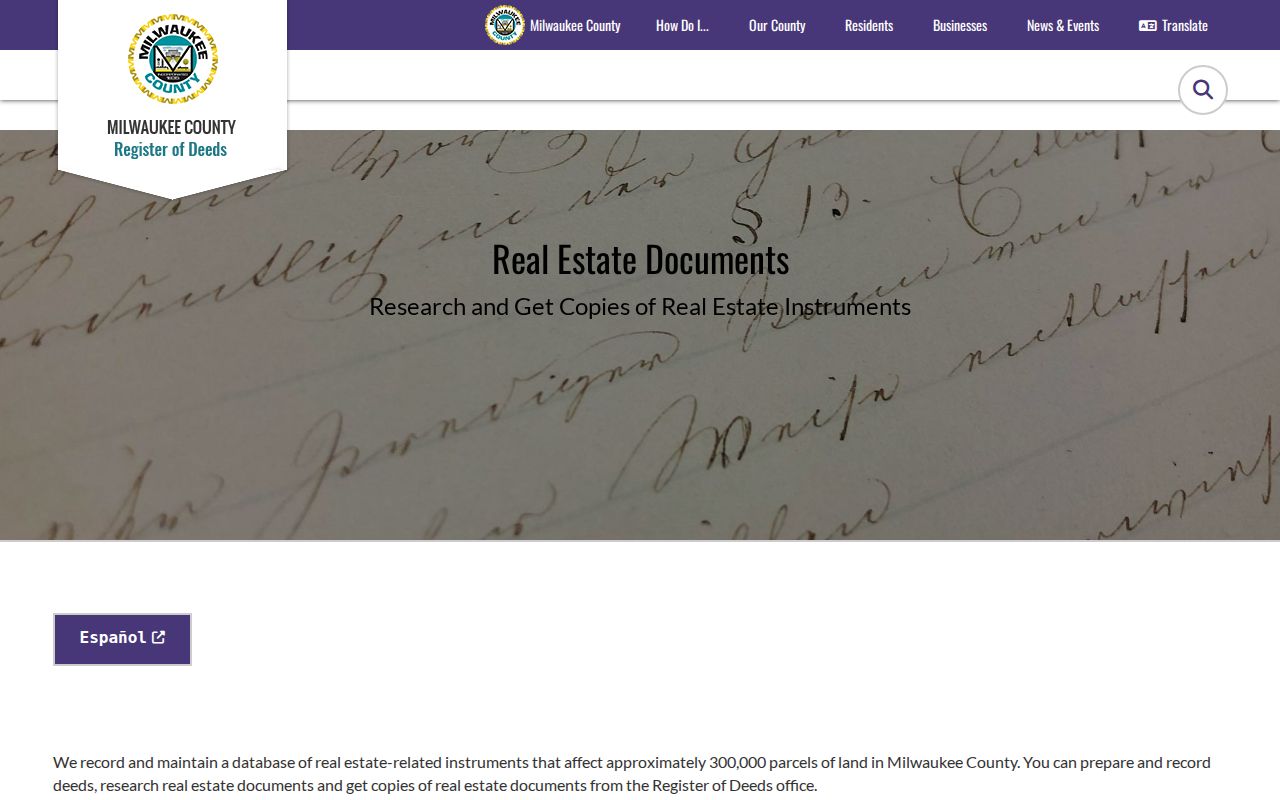 The coverage rules tell you when to switch from a party search to an exact document reference.
Digital Reel for Milwaukee Past Owners
Digital Reel is the bridge for City of Milwaukee land. Its grantor-grantee index runs by tax key, covering the 1920s through 1989. That span matters when street numbers changed or ownership spellings drifted over the decades. Treat each historic tax key as a lead. Confirm every handoff against the recorded deed and its legal description. A tax-key index is never a full title opinion. When lots were split, combined, or turned into condominium units, the county often retired an old tax key for a new parcel number. If the current property no longer matches the older description, pull the plat, the certified survey map, and any later vacation or correction instrument before drawing conclusions from Milwaukee County property records.
Milwaukee County Historic Owner Sources
Milwaukee Public Library local-history holdings carry city directories, street directories, newspapers, maps, and neighborhood histories. A directory entry can show a name, spouse, occupation, and employer. It can also list an address and an owner or renter tag. Check the publisher's key first. Abbreviations varied from one edition to the next. Then pair the directory year with the deed chain. A directory listing is context, not title evidence. City tax rolls add a dated assessment name for the owner of record. Milwaukee's rolls sit on microfilm from 1958 through 2009. Electronic form covers 2010 to 2023. The Wisconsin Historical Society holds pre-October 1907 vital indexes plus wider newspaper and map collections. Later birth, death, marriage, and divorce indexes are open in person by appointment. Vital records and directories fill in family detail. Neither one transfers land.
Start with the Wisconsin genealogy index page for appointment rules and the index years.  The state index can help identify a family clue to carry back to probate and recorded land documents.
Walking the Milwaukee County Deed Chain Backward
Every prior owner marks a separate handoff in the grantor-grantee index. Never follow a name alone. One person can buy, sell, or hold several parcels across the county, so match the legal description, tax key, and recording reference at each step of the Milwaukee County deed records.
- Open the newest deed and write down its recording date, document number, grantee, grantor, and full legal description.
- Search the grantor as grantee in the earlier date range and compare the prior deed's description.
- Carry the prior grantor and instrument reference into the next search; note every lot, block, and tax-key change.
- At the pre-1948 limit, use the exact document number or Book and Page, or request staff assistance.
- Grantor
- The party conveying an interest in a recorded deed.
- Grantee
- The party receiving the interest.
- Chain of title
- The ordered sequence of conveyances connected to the same land.
- Legal description
- Lot/block, plat, or survey language that identifies the land more reliably than a changing street address.
Milwaukee County Probate Handoffs
An estate can interrupt a clean person-to-person chain. Probate files often hold the will, an heir list, the property inventory, a fiduciary appointment, court orders, and authority to sell. Start by searching the estate or decedent in Wisconsin Circuit Court Access. Then request the underlying documents from the Milwaukee County Clerk of Circuit Court. The docket itself is only a lead. The personal representative's deed or deed of distribution is the land instrument that confirms title in the property records. Land can also move outside probate. Survivorship, trusts, transfer-on-death designations, foreclosures, and tax deed sales each leave their own paper trail. Search the representative, trustee, beneficiary, lender, or purchaser as a party, and keep the parcel's legal description constant throughout. A death certificate proves death facts. It does not transfer a parcel.
Milwaukee County Address Changes and Old Owners
An old Milwaukee County address may not match what the assessor lists today. Street renumbering, annexations, replats, lot splits, and condo conversions can all change the label. Sometimes the tax key changes too. Yet the land record still carries the older description, which is why the search stalls. Milwaukee neighborhoods often rely on named plats and lot-and-block descriptions. Older documents may instead use public-land-survey terms or metes and bounds. So expect some translation between systems.
To track the former owner of record, pair the old address with its street name, cross street, municipality, plat, ward, and year. City directories can link occupants to a renumbered address. Once that connection is clear, go back to the Register of Deeds for the prior deed. If the parcel sits near a municipal edge, check the county GIS boundary. Then search both local assessment systems.
Note: A directory entry can identify an address-era clue, but the deed and legal description establish the recorded transfer.
How Far Back Milwaukee County Ownership Records Go
Milwaukee County was organized in 1835. The Register of Deeds traces land records to those earliest years. A scan existing is not the real challenge. Indexing is. To build a continuous chain of title, start with the newest deed. Work backward through grantors you can name. Once older name searches stop producing results, switch to the book/page or document number instead.
A plat changes the method. When the chain hits one, follow its name, book/page, and lot/block. Run those through later certified survey maps or condominium documents. A replat, vacation, estate deed, foreclosure, or correction can make the next instrument look nothing like the one before it. Test each link by the land described, not just the former owner's name.
Lawful use. Use former-owner research for house history, title diligence, or genealogy. Do not use it to track, harass, or expose a living person.